
Abstract
Abstract
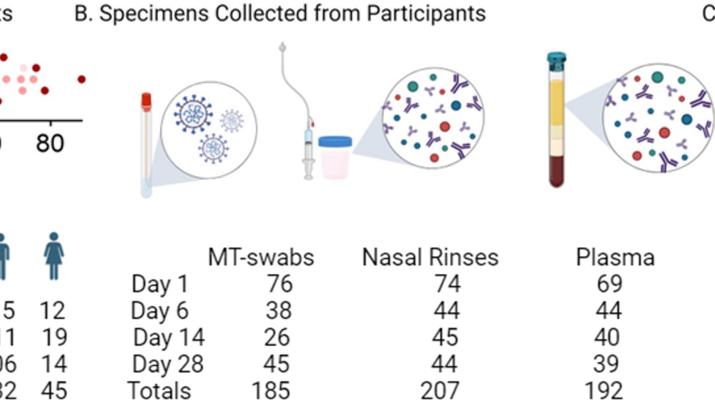
Mucosal immunity plays a crucial role in protection against respiratory viruses. However, the mechanisms underlying mucosal responses and their impact on COVID-19 outcomes are not well understood, as mucosal immunity is compartmentalized and not always reflected in the bloodstream. This study examined primary immune responses in 584 mucosal and blood specimens collected over a month from previously naïve adults and children with COVID-19. Various laboratory techniques were utilized to quantify and characterize viral RNA, antigens, antibodies, and cytokines in the samples, including PCR, sequencing, ELISA, and Luminex. Comprehensive system analysis uncovered distinctive characteristics associated with mild COVID-19 disease progression, including markedly early and elevated induction of mucosal IFN-α and IP-10, followed by increased levels of IL-1RA and IgG. Individuals experiencing mild COVID-19 demonstrated synchronized mucosal and systemic immune responses, with a gradual increase in antibody production that resulted in enhanced neutralization potency, potentially conferring greater protection against future infection. In contrast, individuals with moderate and severe COVID-19 exhibited diminished IFN-α and IP-10 responses and dysregulated mucosal and systemic immune responses marked by rapid and robust yet less effective humoral immunity, potentially driven by high antigen and cytokine levels in both compartments. Collectively, these findings underscore that early mucosal immune responses may play a pivotal role in attenuating COVID-19 disease severity. Additionally, they suggest that primary mucosal immune responses to novel viruses influence clinical outcomes, providing critical insights necessary for developing prognostic indicators, treatments, and mucosal vaccines that confer protection against SARS-CoV-2 and emerging respiratory pathogens.
Importance: This research is crucial for understanding the intricate interplay between mucosal immunity and SARS-CoV-2 infection. By examining the distinct systemic and mucosal immune responses during COVID-19, this study addresses the critical gap in our knowledge of how the body defends itself at the primary site of infection: the respiratory mucosa. The findings shed light on the specific characteristics of the mucosal immune response, including the roles of different antibody isotypes, immune cells, and local factors in controlling viral entry and replication. Furthermore, because this study focuses on de novo immune responses, the results may have broad implications for understanding immune responses to future novel pathogens. Ultimately, this research will contribute to the development of more effective diagnostic tools, therapeutic strategies, and mucosal vaccines to prevent and control COVID-19. By focusing on the often-overlooked mucosal compartment, this work offers a new perspective on comprehending SARS-CoV-2 infection, its implications for public health, and preparedness for future pandemic threats.
Keywords: COVID-19; cytokines; humoral immunity; immune mechanisms; immune response; infectious disease; medical outcomes; mucosal immunity; pediatric infectious disease; viral clearance; viral immunity; viral pathogenesis.