
Abstract
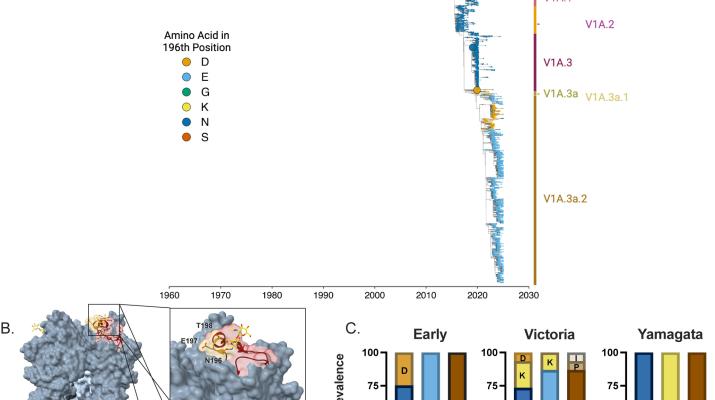
Receptor specificity plays a critical role in influenza virus host tropism and pathogenesis. Influenza A and influenza B viruses (FLUAVs and FLUBVs, respectively) utilize N-glycans with terminal sialic acids on glycoproteins decorating the surface of mucosal epithelial cells as receptors for the virus hemagglutinin (HA) protein. For FLUAVs, the specificity of HA binding to distinct sialic acid linkages on host glycans is a major determinant of species specificity. Amino acid motifs and N-linked glycosylation sites influencing FLUAV HA receptor specificity are well defined. In contrast, considerably less is known regarding determinants of FLUBV receptor specificity, despite its significant contribution to the global influenza disease burden and unique restriction for human hosts. To address this knowledge gap, we utilize microarrays populated with glycans resembling structures found in the respiratory tract to comprehensively define the receptor binding profiles of FLUBVs from different decades and lineages and confirm these results with complementary virus–glycan binding assays. Using wild-type and reverse genetics FLUBVs having singular mutations in the HA receptor binding site (RBS), as well as structural models, we identify an N-glycosylation site at amino acid 196 within the RBS that determines the breadth of HA binding to terminal sialic acids. The definition of the presence of an N-linked glycan as the primary determinant for FLUBV receptor specificity provides a clear mechanism for lineage-specific differences in HA receptor binding. This may help explain the distinct tropism observed between Victoria and Yamagata lineage FLUBVs and provide insights into the disappearance of the Yamagata lineage.